I’m going to tell you something that most people won’t say out loud.
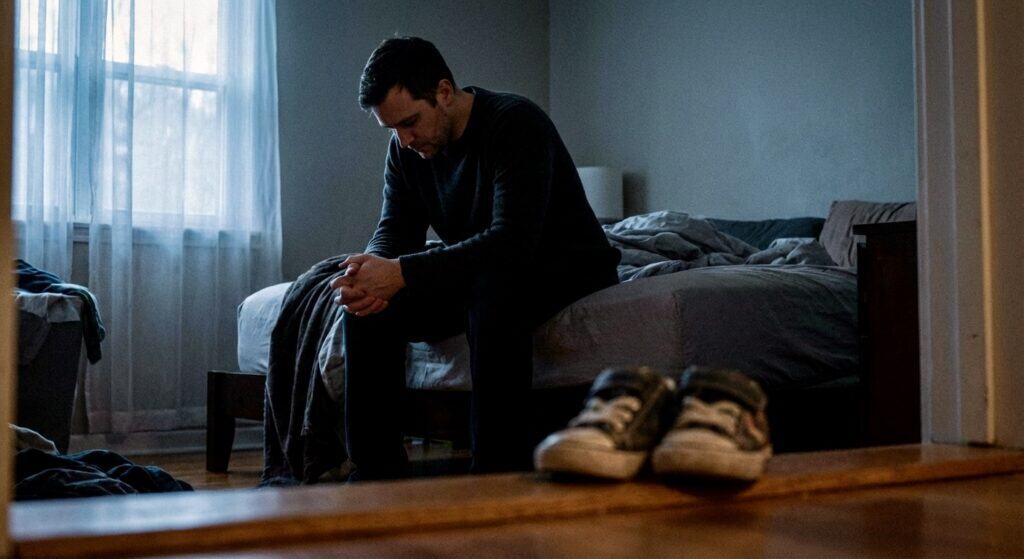
After my daughter died, I didn’t want to be here anymore. Not in an active way—I wasn’t making plans. But I remember lying on her bedroom floor at 2am, holding her sweatshirt, genuinely unsure if I had any reason to get up. The future I’d imagined had completely disappeared. Every version of “forward” felt pointless.
According to The Compassionate Friends, bereaved parents are at significantly higher risk for depression, anxiety, and complicated grief that persists for years. Some studies suggest that losing a child is the single most traumatic experience a human being can endure. I believe it.
But I’m writing this from the other side.
Not “moved on” … I hate that phrase. But transformed. Still grieving, still missing her every single day, but also building something that honors her life instead of just mourning her death.
Finding purpose after losing a child didn’t happen overnight. It wasn’t a lightning bolt moment or some inspirational quote that suddenly made everything okay. It was slow, messy, and honestly felt impossible for a long time.
But it happened. And if you’re reading this in the middle of your darkest chapter, I need you to know: there is a path forward. This article is my attempt to show you what that path looked like for me—not as a prescription, but as proof that it exists.
The Darkness Nobody Prepares You For
Let me be real about where I was, because I think it matters.
The first few weeks after losing my daughter were a blur of funeral arrangements, casseroles from neighbors, and this weird fog where nothing felt real. People kept showing up. Cards kept arriving. I moved through it all like a ghost wearing my own skin.
Then everyone went back to their lives. And that’s when the real grief hit.
I couldn’t make decisions. Couldn’t focus. Couldn’t remember simple things like whether I’d eaten that day. Grief brain is a real phenomenon … it’s been documented in studies showing that bereaved individuals experience cognitive impairment similar to severe sleep deprivation. I couldn’t have told you what day it was most of the time.
The loneliness was crushing. My wife and I were grieving differently, which created distance instead of closeness. Friends didn’t know what to say, so they stopped calling. I felt like I was drowning in a room full of people who couldn’t see the water.
People kept telling me to “stay strong” and “give it time.” I wanted to scream. Those words meant nothing to me. What I needed wasn’t platitudes … I needed a framework. Something my broken brain could actually hold onto. A reason to put one foot in front of the other when every step felt pointless.
That search for structure, for meaning, for any reason to keep going … that’s what eventually led me to finding purpose after losing a child. But it took a while. And I made a lot of mistakes along the way.
Why Traditional Grief Advice Felt Hollow
I tried all the things you’re supposed to try.
Therapy helped some. My counselor was kind and knowledgeable about child loss and bereavement. But sitting in an office talking about my feelings for an hour a week wasn’t enough to fill the other 167 hours. I’d leave feeling slightly lighter, then sink right back down by dinner.
Support groups were hit or miss. I went to a few meetings for bereaved parents and met some incredible people who understood exactly what I was going through. But sometimes hearing everyone else’s pain just added to my own. And the format … sitting in a circle, sharing, crying … didn’t give me what I was really looking for: a path forward.
Books on grief and loss piled up on my nightstand. I read about the stages of grief (which, by the way, were never meant to be linear—Elisabeth Kübler-Ross’s work has been widely misinterpreted). I read memoirs from other parents who’d lost children. Some resonated deeply. But reading about grief and actually knowing what to do with mine were two different things.
The advice I kept getting boiled down to: feel your feelings, be patient with yourself, and wait for time to heal. And look, there’s truth in all of that. You absolutely need to feel your feelings. Patience matters. Time does help.
But nobody told me what to actually DO with myself while I was waiting for time to work its magic. Nobody gave me a framework for rebuilding when the foundation had been completely destroyed.
I needed more than coping. I needed direction. And that’s what was missing from everything I tried in those early months.
The Moment I Realized Survival Wasn’t Enough
About four months after my daughter passed, I had what I can only describe as a moment of terrible clarity.
I was sitting in my car in the driveway, engine off, staring at the garage door. I’d been there for maybe twenty minutes. Couldn’t make myself go inside. Couldn’t make myself go anywhere else. Just frozen.
And this thought surfaced: I can survive this. But is surviving enough?
Because I was surviving. Technically. I was breathing. Eating sometimes. Showing up to work most days. Going through the motions of being a husband, a father to my other children, a functioning human being.
But I wasn’t living. I was just existing. And the thought of existing like that for another thirty or forty years was almost worse than the grief itself.
That’s when I started to understand that I needed more than survival. I needed purpose. Something to build toward. A reason to engage with life again instead of just enduring it.
I didn’t want to “get over” my daughter—that was never going to happen, and honestly, I didn’t want it to. My grief was the price of my love, and I wasn’t willing to let go of either one.
But I also didn’t want my grief to be the only thing left of me. I wanted to transform it into something. I just had no idea how.
How I Discovered a Framework That Actually Helped
I stumbled onto Tony Robbins’ work almost by accident.
It was late at night … another sleepless stretch where I was scrolling through my phone looking for something, anything, to distract me from the silence. A video popped up. Tony talking about RPM … his Rapid Planning Method.
Honestly? My first reaction was skepticism. This guy with his intense energy talking about goals and massive action—it felt a million miles away from where I was. What could a motivational speaker possibly offer someone whose child had just died?
But something made me keep watching. And the framework he described … Results, Purpose, Massive Action Plan …planted a seed in my brain.
What if I could apply this to grief? Not to “fix” it or rush through it, but to give myself some structure? What if I could define a result that wasn’t about moving on, but about honoring her? What if purpose could be the bridge between my pain and something meaningful?
I started small. Almost embarrassingly small.
My first Result: Get through today without falling apart in front of my kids.
My Purpose: My daughter deserves a father who honors her by living, not just surviving.
My Massive Action Plan: Get out of bed. Take a shower. Eat breakfast. Be present for one conversation.
That was it. That was my entire plan for day one.
But here’s the thing—it worked. Not because it was magic, but because it gave my grief-fogged brain something concrete to focus on. Instead of drowning in the enormity of “how do I live the rest of my life without her,” I had four specific things to do before bedtime.
And when I did them, I felt something I hadn’t felt in months: a tiny sense of accomplishment. A reason to try again tomorrow.
Finding Purpose After Losing a Child: What It Actually Looks Like
Let me be clear about what finding purpose after losing a child does NOT mean.
It doesn’t mean replacing your child. Nothing and no one will ever fill that space. Purpose isn’t about filling holes, it’s about building something new alongside the hole that will always be there.
It doesn’t mean “moving on.” I despise that phrase. You don’t move on from your child. You move forward, carrying them with you. Big difference.
It doesn’t mean being happy all the time. Purpose and grief coexist. I can be deeply purposeful and deeply sad in the same hour. That’s not a contradiction—that’s just reality for bereaved parents.
What purpose DOES mean, at least for me, is this: channeling the love I still have for my daughter into something that creates impact beyond my own pain.
For me, that eventually became helping other grieving parents find their own path forward. But your purpose might look completely different. Maybe it’s starting a scholarship in your child’s name. Maybe it’s volunteering with families facing similar losses. Maybe it’s creating art, or writing, or advocating for a cause connected to how your child died.
The specific form doesn’t matter as much as the underlying shift: from purely inward grief to outward contribution. From only mourning what was lost to also building something that lasts.
That shift didn’t happen overnight. It happened over months, then years, through a process I eventually came to understand as transformation—not from grief, but through it.
The Four Pillars That Rebuilt My Life
Through my own journey and my work with other bereaved parents since then, I’ve identified four pillars that seem essential for grief-to-purpose transformation. I didn’t discover these all at once … they emerged over time as I reflected on what actually helped me move forward.
Pillar 1: Acknowledgment
Before you can transform grief, you have to fully feel it. This might sound obvious, but so many of us try to skip this step. We numb, we distract, we “stay strong” for everyone else.
Acknowledgment means giving yourself permission to fall apart. To cry until you can’t breathe. To be angry at the universe, at God, at whoever or whatever you need to be angry at. To sit in the darkness without rushing toward the light.
I spent months in this pillar, and honestly, it still visits me regularly. Acknowledgment isn’t a phase you complete and move past, it’s an ongoing practice of honoring the reality of your loss.
Pillar 2: Identity Reconstruction
When your child dies, you don’t just lose them … you lose the version of yourself that existed in relationship to them. The parent who was going to watch them graduate, get married, have kids of their own. That future self dies too.
Identity reconstruction is the slow process of figuring out who you are now. Not who you were before, because you can’t go back. Not who you “should” be, because there’s no rulebook for this. But who you’re becoming in the aftermath.
This is hard, uncomfortable work. It requires looking at your values, your beliefs, your sense of self, and being willing to let some things go while holding others closer.
Pillar 3: Legacy Creation
This is where purpose really takes shape. Legacy creation means finding tangible ways to channel your love for your child into ongoing impact.
Legacy can take many forms: foundations, scholarships, creative projects, advocacy work, community service, or even just living in a way that would make your child proud. The key is that it transforms passive grief into active contribution.
My legacy work eventually became helping other bereaved parents through coaching and content. But it started much smaller … just writing about my experience, sharing what I was learning, connecting with others who understood.
Pillar 4: Service and Connection
The final pillar is about turning outward. Service and connection mean using your experience to help others who are walking the same dark path.
There’s something that happens when you realize your pain can become medicine for someone else. It doesn’t erase the grief, but it adds a layer of meaning that makes it more bearable.
Bereaved parents often become the best supporters of other bereaved parents … because we actually understand. We don’t offer hollow platitudes or uncomfortable silence. We offer presence, empathy, and the simple gift of saying “I know.”
Practical Steps to Start Your Own Journey
If you’re reading this and wondering how to begin, here are some concrete starting points. These aren’t meant to be done all at once—pick one that resonates and start there.
Give yourself permission to want more than survival. This might sound simple, but it’s a crucial mindset shift. Many grieving parents feel guilty for wanting to feel better, as if healing somehow dishonors their child. It doesn’t. Your child would want you to live fully.
Identify one small way to honor your loved one this week. It doesn’t have to be grand. Light a candle. Look at photos. Write them a letter. Visit a place they loved. Small acts of remembrance keep the connection alive while you figure out the bigger picture.
Find your “why” for getting through today. Not forever—just today. What’s one reason to keep going for the next 24 hours? It might be your other children, your spouse, your dog, a project you care about. Find the thread and hold onto it.
Connect with others who understand. Online communities, support groups, bereaved parent organizations—find your people. Grief shared is grief that becomes slightly more bearable. You don’t have to do this alone.
Take one action toward meaning. Any action. Research a cause related to your child. Write one paragraph about what you’re learning. Send one email to someone who might need support. Movement creates momentum, even when the steps are tiny.
What Nobody Tells You About Grief and Purpose
I want to leave you with some honest truths that I wish someone had told me earlier.
You won’t “get over it.” And that’s okay. The goal isn’t to get over your child—it’s to build a life that holds both the grief and the purpose. They coexist. Some days grief wins. Some days purpose wins. Most days it’s a messy mix of both.
Transformation isn’t linear. You’ll have breakthroughs followed by breakdowns. You’ll feel like you’re making progress, then get ambushed by a song or a smell or an anniversary and end up on the floor sobbing. This isn’t failure. This is grief. It has its own timeline, and that timeline doesn’t care about your plans.
The waves never fully stop. They get less frequent. They get less intense. But they don’t stop. Years from now, something will trigger a wave that knocks you sideways. Let it come. Ride it out. Get back up.
Your child’s legacy is what you make it. Nobody else gets to decide what honoring their memory looks like. Not family members, not friends, not society. You choose. And whatever you choose is valid—as long as it keeps them alive in some way.
It’s okay to laugh again. It’s okay to experience joy. It’s okay to build a life you actually want to live. None of that means you love your child any less. Love and happiness aren’t zero-sum games.

Conclusion: Your Transformation Is Possible
I started this article by telling you I didn’t want to be here anymore after my daughter died. That was true. The pain was so overwhelming that existence itself felt like too much to ask.
But I’m still here. And not just surviving, actually living.
Finding purpose after losing a child didn’t fix my grief. Nothing fixes grief. But it gave me a container for it. A way to honor her by becoming someone she’d be proud of. A framework to turn the worst thing that ever happened to me into something that helps other people survive their worst thing.
That’s transformation. Not moving on … moving forward with meaning.
If you’re reading this in the middle of your darkest chapter, I want you to know: the path exists. I’ve walked it. Thousands of other bereaved parents have walked it. And you can too.
Not today, maybe. Not quickly. Not in a straight line. But eventually, one small step at a time, you can transform your grief into something that carries your child’s legacy forward.
I created Living Legacy Path specifically to help bereaved parents navigate this journey. Because no one should have to figure this out alone.
If any of this resonated with you, if you’re ready to explore what finding purpose might look like in your own life, I’d be honored to walk alongside you.
Your child’s story doesn’t end with their death. Neither does yours.
Justin is the founder of Living Legacy Path, a grief coaching practice dedicated to helping bereaved parents transform pain into purpose. His transformation story has been featured in Tony Robbins’ seminars and on Tony’s official Facebook page. He’s a marathon runner, leadership consultant, and most importantly, a father who carries his daughter’s legacy forward every single day.