I’ll never forget my first Thanksgiving after losing my father. Everyone else seemed to be living in this parallel universe where the holidays were still magical, and I was just trying to figure out how to breathe through dinner without falling apart.
In this guide, I’ll share insights on How to Get Through the Holidays After Losing Someone.
Here’s what nobody tells you: 73% of grieving individuals report that holidays are the most difficult time of year, and the gap between what you’re feeling and what everyone expects you to feel can be absolutely crushing.
But here’s the truth I’ve learned through my own loss and through coaching hundreds of clients through their darkest seasons: pain and problems are part of life, but suffering is a choice. I know that sounds harsh when you’re in it. Stay with me.
The holidays after loss aren’t about “getting over it” or “moving on.” They’re about learning to walk with your grief while still honoring the life you have left to live. This isn’t a guide to fake happiness or toxic positivity … this is about survival, stability, and eventually, transformation.
Understanding Why the Holidays Amplify Grief
Look, if you’re wondering why the holidays feel like someone turned the volume up on your grief, you’re not losing your mind. There’s actual science behind why this season hits different when you’re grieving.
I remember sitting in my car outside a grocery store in December, just staring at people walking in with shopping lists and smiles. The store was playing those same songs my dad used to hum while putting up Christmas lights. I couldn’t even walk inside. That’s the thing about grief during the holidays—it ambushes you in ways you can’t prepare for.
Psychologists call these “anniversary reactions,” and they’re brutal. Your brain has filed away thousands of sensory memories tied to the holidays. The smell of pine. The sound of specific songs. The taste of your mom’s stuffing recipe. When those triggers hit, your nervous system responds like the loss just happened yesterday, even if it’s been years.
Here’s what’s really happening: the holidays are designed to bring people together. That’s literally their entire purpose. So when someone’s missing, that absence doesn’t just sit quietly in the background—it screams. Every tradition highlights the empty space. Every family photo feels incomplete. Every toast reminds you who’s not raising a glass.
And then there’s the social pressure. Oh man, the social pressure. Society expects you to be festive, grateful, joyful. Meanwhile, you’re just trying to survive Tuesday. That gap between what you feel and what everyone expects you to feel? That’s where the real suffering lives.
I’ve had clients describe it as living behind glass. They can see everyone celebrating, but they can’t reach through to that feeling anymore. And then they feel guilty for not feeling festive, which makes them feel worse, which makes them feel more isolated. It’s a vicious cycle.
But here’s what I need you to understand: this doesn’t mean you’re doing grief wrong. This doesn’t mean you’re broken or stuck or failing at healing. It means you loved someone deeply. The depth of your pain is evidence of the depth of your love. That’s not a problem to fix—that’s a reality to honor.
The holidays amplify grief because they’re supposed to. They’re communal experiences, and grief is the ultimate evidence that someone mattered. If the holidays didn’t hurt, that would actually be more concerning.
The Permission You Need to Grieve Differently This Year
I’m about to give you permission for something, and I need you to really hear this: you don’t have to do the holidays the same way this year.
You don’t have to show up to every gathering. You don’t have to host. You don’t have to smile through the pain. You don’t have to protect everyone else from your grief. You don’t have to be “strong” for the family.
Let me tell you about one of my clients—I’ll call her Sarah. Her husband died in March, and by November, her family was already expecting her to host Thanksgiving like she’d done for fifteen years. Twenty-three people. Full turkey. Homemade pies. The works.
As we navigate these challenges, it’s essential to explore resources and strategies on How to Get Through the Holidays After Losing Someone.
She called me in tears because she felt like saying no would be letting everyone down. I asked her one question: “What do YOU need this year?” She went silent for a long time. Then she said, “I need to not pretend I’m okay when I’m not.”
So she didn’t host. She ordered a small meal, spent Thanksgiving with her two closest friends, and left her phone on silent. Her family was upset at first. But you know what? They survived. And more importantly, so did she.
Here’s the thing about grief: normal doesn’t exist after loss. You’re not returning to who you were before. You’re becoming someone new—someone who’s learning to carry loss and still move forward. That person gets to make different choices.
The concept I teach my clients is called “grief pacing.” It’s the idea that you have a limited amount of emotional bandwidth, and you get to decide how to spend it. Think of it like a battery. Some days you wake up at 80%. Some days you’re running on 20%. The holidays? You might be operating at 35% on a good day.
Grief pacing means checking in with yourself and asking: Do I have the capacity for this? Not “should I” or “am I supposed to”—but do I actually have the energy for this without completely depleting myself?
And here’s the key: being present doesn’t mean pretending to be fine. You can show up and still be honest about where you are. You can participate and still acknowledge this is hard. Those two things aren’t mutually exclusive.
I’ve learned that real strength isn’t pushing through like nothing happened. Real strength is saying, “I’m not okay, and I’m going to honor that instead of faking it.” That’s the difference between surviving and suffering.
When you give yourself permission to grieve differently, you’re not being weak. You’re being wise. You’re recognizing that healing doesn’t happen on a timeline, and it definitely doesn’t pause for the holidays just because everyone else wants to celebrate.

Practical Strategies to Navigate Holiday Triggers
Okay, let’s get tactical. Because understanding why the holidays are hard is one thing—actually getting through them without completely falling apart is another.
I’m going to share a framework I use with every single client who’s facing their first holiday season after loss. I call it the “Before, During, After” method, and it’s saved more people from holiday meltdowns than I can count.
Before the event: You need to prepare emotionally. I’m not talking about psyching yourself up with toxic positivity. I’m talking about honest mental rehearsal. Close your eyes and walk through the event in your mind. Where will you be? Who will be there? What moment will probably trigger you? When your aunt asks how you’re doing, what will you say?
This isn’t pessimism, this is strategic preparation. Athletes visualize their performance before competition. You’re doing the same thing. You’re giving your brain a roadmap so it’s not caught completely off guard.
Here’s what I do: I imagine the hardest moment. For me, it was always when someone would tell a story about my dad and everyone would laugh, and I’d feel this overwhelming wave of “he should be here telling this story himself.” I’d rehearse my response: deep breath, acknowledge the feeling, maybe step outside for two minutes if needed.
During the event: This is where the “grief anchor” comes in. It’s a physical object you can touch that grounds you when emotions spike. Some of my clients carry a stone in their pocket. Others wear a specific piece of jewelry. One guy kept a photo in his wallet that he could touch through the leather when he needed to feel connected.
The grief anchor serves two purposes. First, it gives you something tangible to focus on when you’re overwhelmed. Second, it’s a reminder that you can handle this—you’ve prepared, you have tools, and you’re not powerless.
Also, you need an exit strategy. Here’s mine: I tell one trusted person at the gathering, “If I tap you on the shoulder and say I need to make a call, that’s my signal I need to leave.” No explanation needed. No drama. Just a quiet exit plan.
And please, for the love of everything, schedule “grief time” before or after the event. I know this sounds weird, but it works. Give yourself 20 minutes to fall apart if you need to. Cry in your car. Scream into a pillow. Journal. Whatever. When you give your grief a designated time and space, it’s less likely to hijack you in the middle of dinner.
After the event: Debrief with yourself. What worked? What didn’t? What do you need to do differently next time? This isn’t about judging yourself—it’s about learning your grief patterns so you can navigate them better.
One of the techniques I teach is the “5-minute reset.” When you feel emotions becoming overwhelming, and you will, you don’t need a full breakdown. You just need five minutes. Lock yourself in a bathroom. Go sit in your car. Step outside and look at the sky. Breathe deeply for five minutes. Let the wave pass through you instead of trying to stop it or push it down.
The wave will pass. It always does. The key is not fighting it while it’s happening.
Honoring Your Loved One Without Being Consumed by Sadness
This is where things get tricky, and it’s a question I get asked constantly: How do I honor them without making everything about the fact that they’re gone?
There’s a difference between tribute and torture. Let me explain.
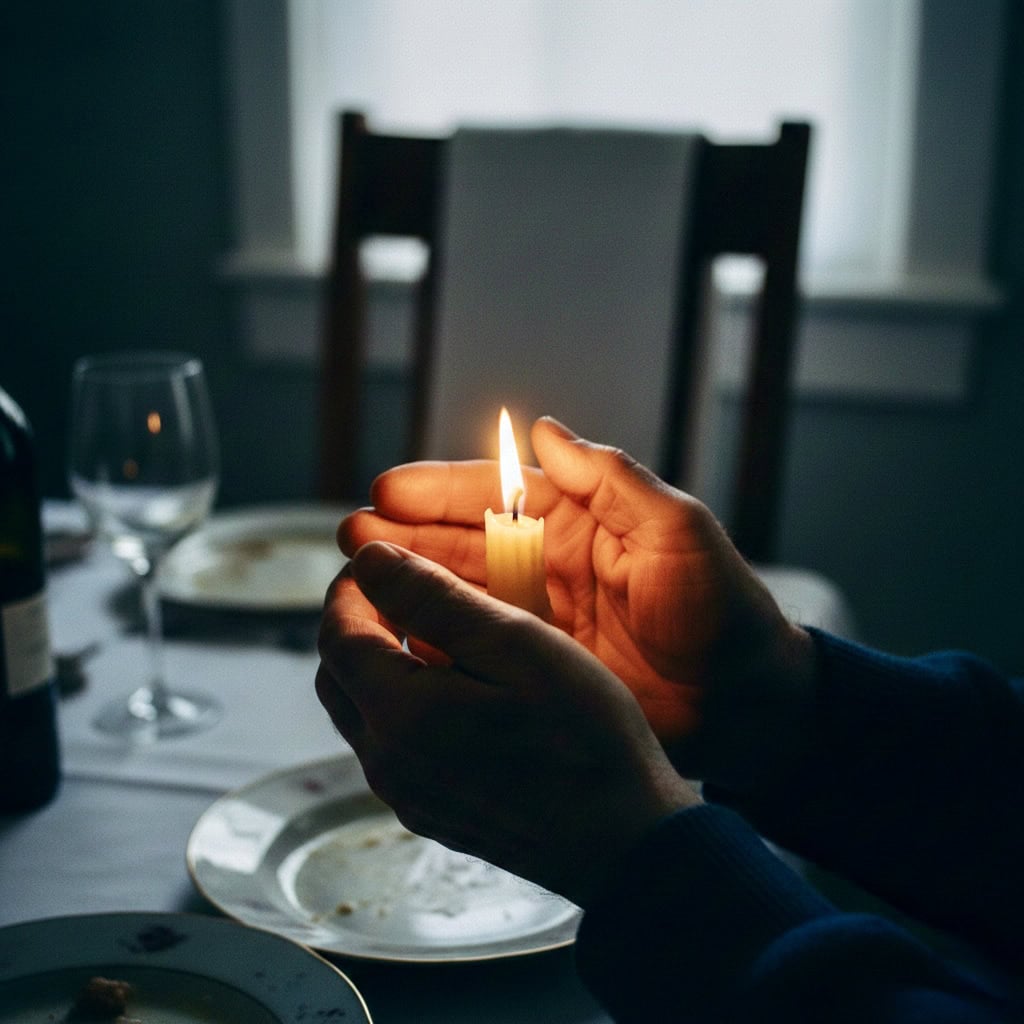
Tribute is lighting a candle in their memory and saying a quiet thank you for the years you had. Torture is spending three hours crying over their empty chair and derailing everyone else’s dinner with your grief.
Both are valid feelings. But one honors their memory while allowing life to continue. The other keeps you stuck in the pain.
I learned this the hard way. My son Chase was young when my father died, and I remember our first Christmas without him. I was so consumed with missing him that I almost missed being present with him. I was physically there, but emotionally, I was somewhere else … lost in grief.
It hit me when he asked, “Daddy, are you sad?” And I realized: my dad would be heartbroken if he knew his death was preventing me from being fully present with his granddaughter. That wasn’t honoring him. That was letting grief consume everything good that remained.
Here’s what healthy remembrance looks like: you incorporate their memory into the day without making it the entire focus. Maybe you make their favorite dish. Maybe you tell one story about them. Maybe you hang a special ornament or make a toast. But then you let the day continue. You let joy exist alongside the grief.
One of my clients does something beautiful. Every Thanksgiving, she makes her late husband’s famous apple pie, and before dinner, everyone shares one thing they loved about him. Then they eat, laugh, and move forward with the meal. It takes five minutes. It’s meaningful. And it doesn’t hijack the entire day.
The concept I want you to understand is “legacy moments.” These are small, intentional actions that honor who they were without turning into grief spirals. Your mom loved feeding people? Make her recipe and share it. Your spouse was generous? Do something kind for someone in their name. Your child loved Christmas lights? Drive through a neighborhood display and remember their excitement.
These moments say, “You mattered. You’re still influencing how I live. You’re not forgotten.” And then you keep living. Because that’s what they’d want.
I’ll say something controversial: your loved one doesn’t want you to be miserable. They want you to remember them with love, yes. But they also want you to experience joy. They want you to laugh. They want you to be present with the people who are still here.
Honoring someone’s memory isn’t about constant sadness. It’s about carrying forward the best of who they were while still building a life worth living. That’s the real tribute.
When Family and Friends Don’t Understand Your Grief
Let’s talk about something that makes grief even more isolating: when the people around you don’t get it.
Someone’s going to say something unbelievably stupid to you this holiday season. I guarantee it. “They’re in a better place.” “At least they’re not suffering.” “You should be over this by now.” “God needed another angel.” “Everything happens for a reason.”
I want you to hear this loud and clear: their discomfort with your grief is not your responsibility to manage.
People say dumb things when they’re uncomfortable. They’re trying to help, but they end up minimizing your pain because they don’t know how to sit with it. That’s their problem, not yours. You don’t owe them a smile or reassurance that you’re “doing better.”
I remember a family member telling me six months after my dad died, “You’ve got to move on. He wouldn’t want you sad.” And I just stared at them. Because what do you even say to that? My father died. I don’t get to just “move on” like I’m changing TV channels.
Here’s what I’ve learned about setting boundaries without creating World War III at the dinner table: you don’t need to defend your grief or explain your timeline to anyone.
When someone says something unhelpful, you have three options:
- Redirect: “I appreciate that you care. Pass the potatoes?”
- Honest but brief: “I’m still processing. I’d rather not talk about it right now.”
- Subject change: “How’s work going for you?”
You don’t owe anyone a dissertation on your grief journey. A simple boundary is enough.
The loneliness of grief is real, though. You can be in a room full of people who love you and still feel completely alone. Because unless they’ve lost someone, they can’t fully understand. They can sympathize, but they can’t empathize. And that gap? That’s where the isolation lives.
This is why you need to identify your “grief allies.” These are the people who get it—either because they’ve experienced similar loss or because they have the emotional intelligence to sit with your pain without trying to fix it.
My grief ally was a friend who’d lost his brother years earlier. He never told me it would get better. He never tried to cheer me up. He just said, “This is brutal, and I’m here.” That’s it. That was the most helpful thing anyone said to me.
Find those people. Protect your energy for them. Everyone else? They mean well, but they don’t need unlimited access to your emotional state.
And please, avoid the comparison grief trap. There’s always someone who will try to one-up your pain or imply their loss was worse. “At least you had twenty years with your parent. I only had fifteen.” Don’t engage. Grief isn’t a competition, and your pain doesn’t need validation from anyone.
Creating New Traditions That Honor Both Loss and Life
Here’s a hard truth I need to share: some of your old traditions are going to hurt too much to continue. And that’s okay.
You’re not betraying anyone by changing how you do the holidays. You’re adapting to a new reality. That’s not weakness—that’s wisdom.
I teach my clients about “bridge traditions.” These are the practices that keep what serves you and release what hurts. Maybe you keep the Christmas Eve dinner but skip the morning present ritual. Maybe you do Thanksgiving at a different location. Maybe you celebrate on a different day entirely.
The goal isn’t to erase the past. It’s to build a present that you can actually survive.
My first year without my dad, I couldn’t do our traditional Christmas morning routine. It was too painful. So I did something completely different—I took my children to volunteer at a shelter. We served meals to people who had even less than we did in that moment. It wasn’t our old tradition. But it became a new one. And it gave me something to focus on besides the empty space.
Starting new traditions feels weird at first. It feels like you’re trying to replace something sacred. But you’re not replacing anything—you’re evolving. You’re recognizing that life has changed, and your traditions need to change with it.
Some ideas that have worked for my clients:
- Starting a “memory jar” where everyone writes down a favorite memory throughout the day
- Doing a charitable act in their loved one’s name instead of traditional gift-giving
- Taking a trip somewhere new to avoid the trigger-heavy home environment
- Having a small, intimate gathering instead of the big family chaos
- Creating a photo slideshow or memory book as a new annual ritual
The key is this: choose traditions that feel authentic to you. Don’t force something because you think you “should.” If it doesn’t feel right, it’s not right.
And here’s something that trips people up: you’re allowed to laugh. You’re allowed to experience joy. You’re allowed to have a good moment without immediately feeling guilty about it.
Your loved one doesn’t want you to be miserable forever. They want you to live. They want you to find reasons to smile again. Experiencing happiness doesn’t mean you’ve forgotten them or that their death doesn’t matter. It means you’re choosing life over suffering.
That’s not betrayal. That’s courage.
Evolution isn’t disrespect. You’re not erasing them from your story—you’re writing a new chapter that acknowledges they’re gone while still making room for joy, connection, and meaning. That’s the healthiest thing you can do.
The Difference Between Surviving and Suffering
Okay, we need to talk about the hard stuff now. This is where my philosophy might challenge you, but I need you to stay with me because this is the most important section of this entire article.
Pain and problems are part of life. Suffering is a choice.
I know that statement probably made you bristle. You might be thinking, “How dare you tell me my suffering is a choice when someone I love is dead?” Hear me out.
Pain is what you feel when someone dies. That’s involuntary. That’s grief. That’s love with nowhere to go. That pain is necessary, valid, and has to be processed.
Suffering is what happens when you resist that pain. When you fight reality. When you tell yourself stories about how life shouldn’t be this way, how it’s not fair, how you can’t survive this.
There are three types of suffering:
- Necessary grief: This is the pain you must walk through. You can’t avoid it. You have to feel it to heal it. This is healthy.
- Resistance to reality: This is when you spend energy fighting what is. “This shouldn’t have happened.” “Life is supposed to be different.” That resistance? That’s where suffering lives.
- Self-inflicted narratives: These are the stories you tell yourself. “I’ll never be happy again.” “I can’t do this.” “Everything is ruined.” These narratives create additional suffering on top of the necessary pain.
Here’s what I’ve learned from my own loss and from coaching others: you can’t control the pain. But you can control how much additional suffering you pile on top of it.
Radical acceptance doesn’t mean you like what happened. It doesn’t mean you’re okay with it. It means you stop fighting reality and start working with it.
When my father died, I spent months in resistance. “He was too young.” “This isn’t fair.” “I needed more time.” All of that was true. And all of that kept me stuck in suffering. The pain was inevitable. The suffering? That was my choice to resist what I couldn’t change.
The moment I shifted from “This shouldn’t have happened” to “This DID happen, now what am I going to do with it?” was the moment I moved from suffering to transformation.
Let me be clear: this isn’t about rushing your grief. This isn’t about toxic positivity or pretending everything’s fine. This is about recognizing when you’re honoring your pain versus when you’re choosing to stay stuck in it.
Warning signs you’re slipping into destructive suffering:
- You’re isolating completely and refusing all connection
- You’re unable to function in basic ways for extended periods
- You’re using substances to numb the pain
- You’re having thoughts of harming yourself
- You’re unable to experience any positive emotion without immediate guilt
- You’re stuck in the same emotional place you were six months ago with no movement forward
If any of these resonate, please get professional help. That’s not weakness. That’s the strongest choice you can make.
Therapy, grief counseling, coaching—these aren’t admissions of failure. They’re tools. They’re lifelines. They’re evidence that you’re choosing transformation over suffering.
Self-Care Strategies That Actually Work During the Holidays
Let’s be real: self-care advice during grief is usually garbage. “Take a bubble bath!” “Do some meditation!” “Practice gratitude!”
That stuff doesn’t cut it when you’re actively grieving during the hardest season of the year. You need strategies that actually work when your world has fallen apart.
Here’s what does work:
The non-negotiables: No matter how bad it gets, you have to maintain three things: sleep, movement, and basic nutrition. I know you don’t want to. I know it feels pointless. Do it anyway.
When grief is active, your body is under massive stress. Your nervous system is in overdrive. Your cortisol levels are through the roof. If you stop sleeping, stop moving, and stop eating properly, you’re not just emotionally struggling—you’re physically destroying yourself.
I’m not talking about running marathons or cooking gourmet meals. I’m talking about: get six hours of sleep, take a 10-minute walk, eat a vegetable. That’s it. Those three things will keep you from complete collapse.
Build a grief toolkit: Before you need it, create a list of things that have helped you in hard moments. This isn’t about what “should” work. It’s about what actually does work for YOU.
My grief toolkit includes: calling my one friend who gets it, sitting outside for five minutes, watching a specific comedy special, listening to one particular song, and journaling three pages of stream-of-consciousness writing. That’s it. Those five things have pulled me out of more dark moments than I can count.
What’s in yours?
The isolation trap: Here’s where I’m going to challenge you. Isolation feels safe. It feels like protection. But it’s usually making everything worse.
I’m not saying you need to be social all the time. I’m saying you need SOME connection. Even if it’s just texting one person. Even if it’s just sitting in a coffee shop around other humans without talking to anyone.
Complete isolation feeds the suffering. It reinforces the narrative that you’re alone in this. It cuts off the lifelines that could help you survive.
Balance solitude (which can be healing) with isolation (which is destructive). There’s a difference.
Physical movement matters: I hate that this is true, but it is. Movement processes emotional pain in ways that sitting with it doesn’t. When you’re overwhelmed, move your body. Walk. Dance. Clean. Do jumping jacks. I don’t care what it is—just move.
Your body stores trauma and grief. Movement helps release it. That’s not woo-woo nonsense. That’s neuroscience.
Ask for specific help: Don’t wait for people to read your mind. Tell them exactly what you need.
Instead of “I’m struggling,” try:
- “Can you check on me Tuesday afternoon?”
- “I need someone to sit with me while I go through his belongings.”
- “Will you come with me to the family gathering so I’m not alone?”
People want to help. They just don’t know how. Give them specific tasks. Make it easy for them to show up for you.
Finding Meaning in the Pain: Your Path Forward
We’re going to end with this: your story didn’t end the day everything changed.
I need you to hear that again. Your story didn’t end. A chapter closed. The most painful, devastating, world-shattering chapter closed. But you’re still here. You’re still writing.
The question isn’t “Why did this happen?” That question will drive you insane because there’s rarely a satisfying answer. The better question is: “What am I going to do with this pain?”
Because here’s the truth: you have two options. You can let this loss define you as a victim, or you can transform it into something that propels you forward. Both are understandable. Only one leads to a life worth living.
Psychologists have studied something called “post-traumatic growth.” It’s the phenomenon where people who experience profound loss often develop deeper compassion, stronger relationships, greater appreciation for life, and a clearer sense of purpose. Not in spite of their loss—because of it.
You don’t “get over” grief. You don’t “move on” from losing someone you love. But you can transform it. You can take that pain and turn it into purpose.
I teach a framework called the Four Stages of Grief Transformation:
1. Survival: This is where you are now. You’re just trying to make it through the day. That’s enough. Don’t rush this stage.
2. Stability: This is when you start to function again. The waves of grief are still there, but they’re not constant anymore. You have good days mixed in with the hard ones.
3. Significance: This is when you start asking, “What does this mean? What can I learn? How can I honor them?” You’re beginning to search for meaning.
4. Legacy: This is when you take your pain and transform it into something beautiful. You build something. You help others. You create meaning from the loss.
You don’t skip stages. You don’t rush the process. But you do keep moving forward, even when forward feels impossible.
Building something beautiful from your pain isn’t betrayal. It’s tribute. It’s saying, “You mattered so much that I’m going to make sure your impact continues through how I live my life.”
Maybe that means starting a scholarship in their name. Maybe it means volunteering for a cause they cared about. Maybe it means being a better parent, friend, or partner because you understand how fragile life is.
Or maybe it just means showing up every day and choosing to live fully in their honor. That’s legacy too.
The truth about grief is this: you don’t get over it. You learn to walk with it. You integrate it into your identity. And in time—not on anyone else’s timeline, but in YOUR time—you transform it into something that doesn’t just hurt. It also propels you. It also connects you to others. It also gives you purpose.
Your loved one doesn’t need you to suffer forever to prove you loved them. They need you to LIVE. To show up. To find moments of joy. To build something beautiful with the life you have left.
That’s not moving on. That’s moving forward. And that’s the greatest tribute you can give.
Final Thoughts
Getting through the holidays after losing someone isn’t about having all the answers or doing everything perfectly. It’s about showing up for yourself with the same compassion you’d show a friend in pain.
This season will be hard. There’s no way around that. But hard doesn’t mean hopeless.
You get to decide how you navigate this. You get to set boundaries, create new traditions, honor your person in your own way, and yes—you even get to experience moments of joy without guilt. That’s not betrayal. That’s survival. And eventually, it becomes something even more powerful: it becomes your transformation.
If you’re reading this in the middle of the night, unable to sleep because the weight of another holiday without them feels unbearable—I see you. Your pain is valid. Your grief matters. And you’re not alone in this.
The holidays after loss aren’t about “getting back to normal.” They’re about discovering what your new normal looks like—and giving yourself permission to build it one small, brave choice at a time.
You didn’t ask for this path. But you’re walking it. And every step forward—no matter how small—is evidence of your strength, your resilience, and your unwillingness to let loss steal everything from you.
That’s not just survival. That’s transformation. And it’s exactly what your loved one would want for you.
Ready to transform your pain into purpose? Download my free Holiday Grief Survival Guide with daily practices to help you navigate this season with grace, strength, and honest hope.
Justin Fox is a grief coach and founder of Living Legacy Path, helping parents and individuals transform profound loss into purposeful living. Drawing from his own experience of losing his father less than a year after losing his daughter, Justin provides frameworks, support, and honest guidance for those navigating grief’s most difficult seasons.