Have you ever noticed how your GPS never freaks out when you miss a turn? It simply says “recalculating” and finds you another route. That’s exactly how life works when you understand the GPS Theory of Life!
Here’s something wild: according to research from the University of Scranton, only 8% of people actually achieve their New Year’s resolutions. But what if I told you that failure isn’t about the goal—it’s about how we respond when we veer off course? The GPS Theory of Life changes everything about how we view success, setbacks, and the journey itself. It’s a framework that proves success isn’t just possible—it’s inevitable when you stay committed to your destination.
Think about it. Your GPS doesn’t judge you for taking a wrong turn. It doesn’t say, “Well, you messed up, might as well give up and stay lost forever!” Instead, it immediately starts working on a new path forward. This simple concept holds the secret to guaranteed success in every area of your life. When you adopt this mindset, you stop seeing failures as endings and start seeing them as natural parts of navigation. And that shift? That’s when everything changes.

Understanding the GPS Theory of Life
Okay, so let me tell you how I stumbled onto this whole GPS thing. I was driving to a wedding about ten years ago, completely lost in a part of town I’d never been to before. My phone died (of course), and I was using one of those old Garmin units my dad gave me. I made like three wrong turns in a row because I wasn’t paying attention, and here’s what blew my mind, the GPS never once sounded annoyed with me!
It just kept saying “recalculating” in that calm voice. And I thought, man, why can’t I treat myself like this when I mess up in life?
The GPS Theory of Life is basically this: if you have a clear destination and you’re willing to keep moving forward no matter what, success becomes inevitable. Not possible. Not probable. Inevitable. Here’s why this works, your GPS doesn’t care about your past mistakes, your current limitations, or how many times you’ve failed before. It only needs two pieces of information: where you are right now and where you want to go. That’s it!
Most goal-setting systems fail because they’re too rigid. They tell you exactly what path to take, and if that path doesn’t work out, you feel like a failure. But GPS navigation shows us a better way. The technology literally has one job: get you from point A to point B, and it doesn’t care how that happens.
I’ve seen this play out in my own life so many times. When I wanted to switch careers, I had this perfect plan mapped out—get this certification, apply to these companies, start this new job within six months. Well, none of that happened the way I planned! The certification program got cancelled. The companies weren’t hiring. But you know what? I still ended up in that new career. Just took a completely different route that involved freelancing first, then networking, then getting hired through a connection I made.
The three essential components of this theory are stupidly simple. First, you need a destination—a clear vision of what success looks like for you. Second, you need to know your current position without lying to yourself about where you are. And third, you need route flexibility, which means being willing to try different approaches when one isn’t working. That’s the whole system, and it works for everything from career goals to fitness goals to relationship goals.
Why Your Destination Matters More Than Your Path
I used to get so caught up in the “how” that I’d never actually start anything. Like, I’d spend three months researching the perfect way to start a side business, reading every book and blog post about it, but never actually launching anything because I was terrified of doing it “wrong.” Sound familiar?
Here’s what I learned the hard way: your GPS doesn’t spend hours debating which route is theoretically best before it starts navigating. It picks a route and starts giving you directions immediately! And if that route turns out to be slower or blocked, it just picks another one. The destination is what matters, not the path.
Think about Steve Jobs for a second. His destination was creating technology that was beautiful and intuitive. But his path? Dude got fired from his own company, started other companies, and then came back to Apple years later. The path was messy as hell, but the destination never changed. That’s the power of having a clear endpoint in mind.
I see people fail all the time because they get too attached to one specific method. They’re like, “I have to lose weight by doing keto” or “I have to build my business through Instagram marketing.” But what happens when keto makes you miserable or Instagram changes its algorithm? They give up entirely! That’s not how GPS works. If there’s traffic on the highway, it doesn’t just stop and say “well, I guess we’re not getting there.” It finds surface streets.
The practical part of this is actually sitting down and defining what you really want. Not how you’ll get there—just where “there” is. For me, when I was broke and frustrated, my destination was “financial stability where I’m not stressed about bills.” That’s it. I didn’t specify “by getting a promotion” or “by starting a business.” I just knew where I wanted to end up.
Once you’ve got that crystal clear destination, something weird happens. Your brain starts noticing opportunities you would’ve missed before. It’s like when you’re thinking about buying a specific car and suddenly you see that car everywhere. Your reticular activating system (that’s the part of your brain that filters information) starts looking for routes to your destination automatically.
The Recalculating Mindset: Turning Setbacks Into Redirects
Man, I wish someone had taught me this mindset when I was younger. I used to think every setback was a sign that I wasn’t meant to succeed. Got rejected from a job? Must mean I’m not good enough. Had a business idea that flopped? Must mean I’m not entrepreneurial material. It was exhausting!
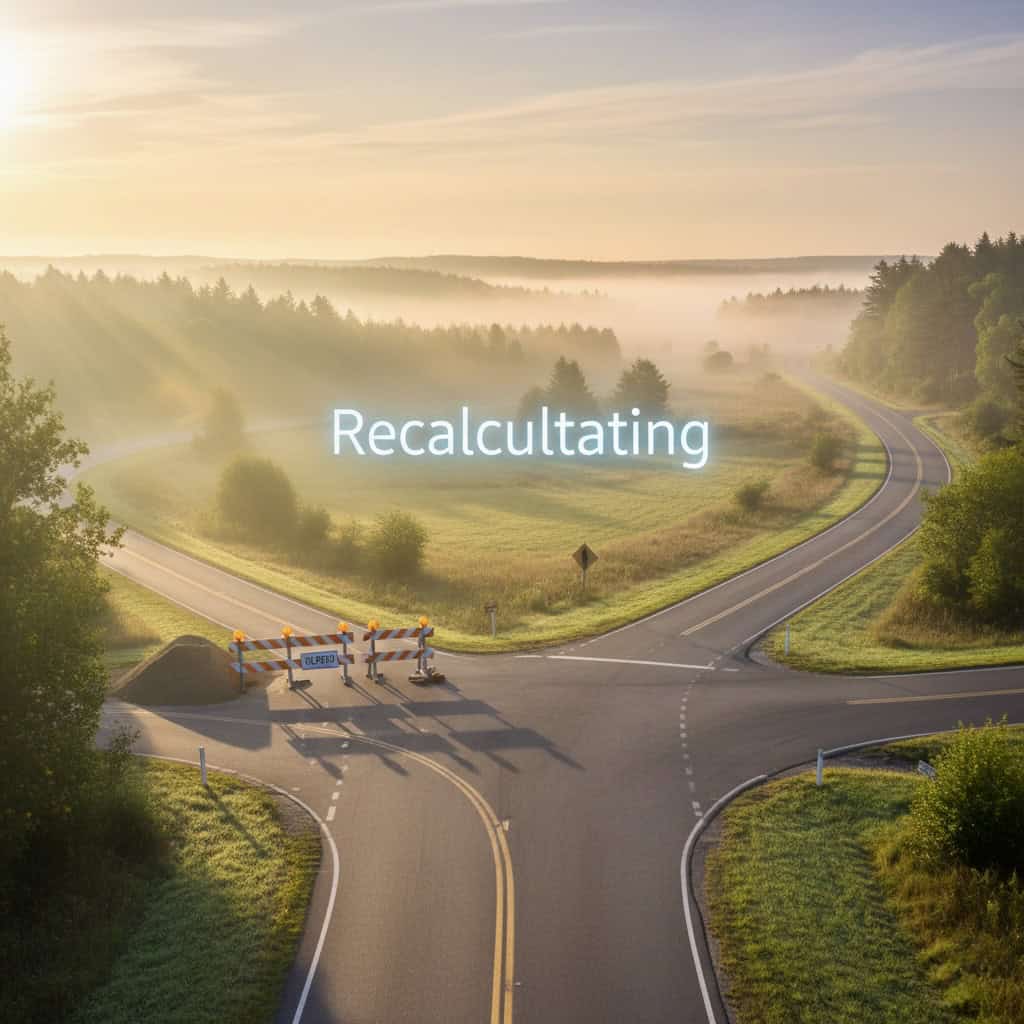
The recalculating mindset changed everything for me. It’s this idea that there’s no such thing as failure—there’s only feedback. When your GPS says “recalculating,” it’s not judging you. It’s not saying you’re a terrible driver. It’s simply acknowledging that you’re not on the optimal route anymore and immediately working on a solution.
I tested this big time when I tried to write my first book. I spent six months writing what I thought was going to be this groundbreaking manuscript. Sent it to ten agents. Got ten rejections. Old me would’ve been like, “Well, I guess I’m not a writer” and given up forever. But with the GPS mindset, I thought, “Okay, this route didn’t work. What’s another route?”
Turned out the book idea wasn’t the problem—my approach was. Instead of trying to get an agent first, I self-published a smaller version, built an audience, and then publishers started reaching out to me. Same destination, completely different route. And honestly? The second path was probably better because I learned so much more.
The psychology behind this is actually pretty fascinating. There’s research showing that people who view challenges as temporary and specific (rather than permanent and global) are way more resilient. When you adopt the recalculating mindset, you’re automatically reframing setbacks as temporary route changes rather than permanent failures.
Here’s a practical technique I use: whenever something doesn’t go according to plan, I literally say out loud, “Recalculating.” I know it sounds silly, but it triggers this mental shift where I stop dwelling on what went wrong and start looking for what’s next. My wife thinks I’m crazy when I do this, but hey, it works!
The coolest part? Detours often lead to better outcomes. I can’t tell you how many times I’ve been forced off my planned path and ended up somewhere even better. That career switch I mentioned earlier? It only happened because I got laid off, which felt devastating at the time. But that “setback” forced me to recalculate and ultimately led me to a job I loved way more.
How to Input Your Coordinates: Knowing Where You Are Right Now
This is where most people screw up, and I’m speaking from experience here. You cannot get directions if you lie about your starting point!
I remember when I decided to get serious about fitness. I wanted to run a marathon within a year. Sounds great, right? Except I was lying to myself about my current fitness level. In my mind, I was “pretty active” and “in decent shape.” In reality, I couldn’t run a mile without stopping. My GPS was trying to give me directions from point B when I was actually at point Z. No wonder the training plan didn’t work!
Honest self-assessment is uncomfortable as hell. It means looking at your bank account and actually adding up what you owe. It means stepping on the scale even when you don’t want to. It means admitting that maybe you’re not as far along in your career as you pretended you were at the high school reunion. But here’s the thing—your GPS needs accurate data to work.
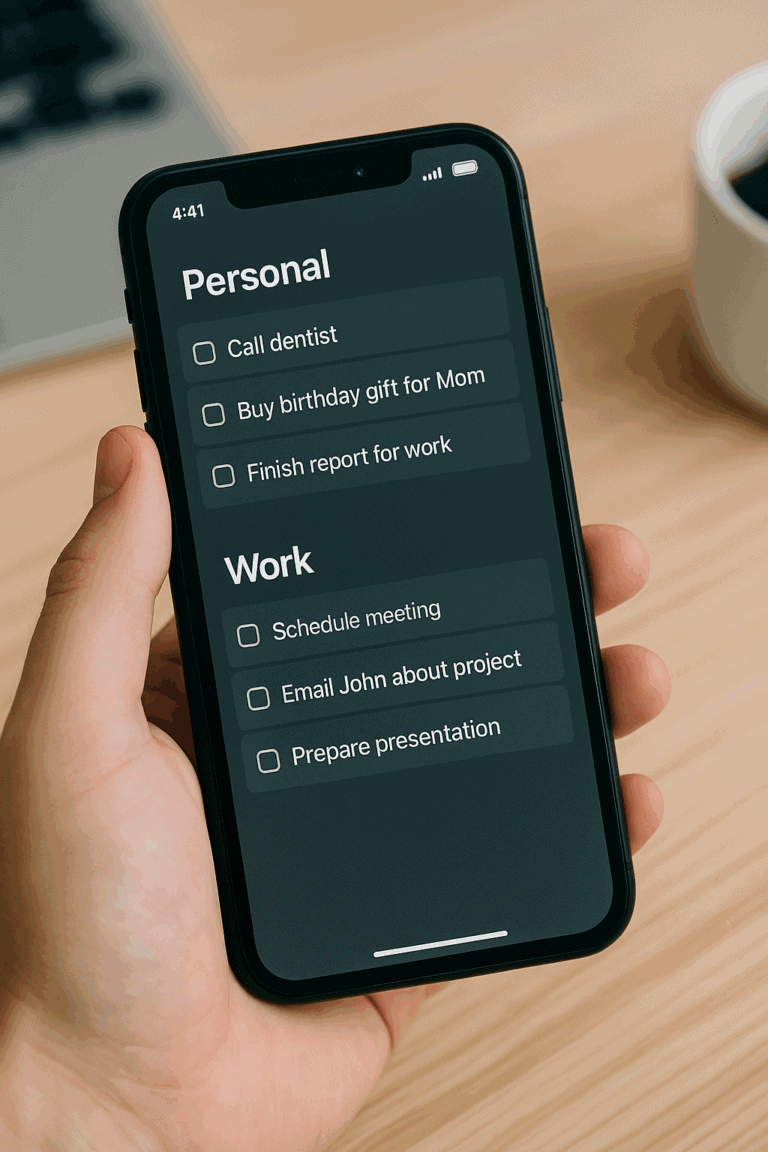
I do this thing now called a “life audit” every quarter. Sounds fancy, but it’s really just me sitting down with a coffee and honestly evaluating where I am in different areas. Career? Write down my actual salary and job satisfaction level, not what I wish it was. Relationships? Rate them honestly. Health? Look at real numbers and habits, not intentions.
The danger of self-deception is that you end up following a route that’s meant for someone else’s starting point. It’s like if you’re in New York but you tell your GPS you’re in Boston—none of the directions are gonna make sense! I’ve watched friends stay stuck for years because they wouldn’t admit where they really were. They’d say stuff like “I’m basically fluent in Spanish” when they barely knew a hundred words, then wonder why they bombed the job interview that required Spanish fluency.
One method I learned from a therapist friend is the “reality check” technique. For any area where you want to improve, ask yourself three questions: What’s objectively true about my current situation? What stories am I telling myself? And what evidence do I have for or against those stories? This cuts through the BS real quick.
Another thing—your starting point isn’t permanent! Just because you’re broke today doesn’t mean you’ll always be broke. Just because you’re out of shape now doesn’t define you forever. The GPS only needs to know where you are today to start navigating. Tomorrow you’ll be somewhere different, and that’s fine. The system works no matter where you start from.
Multiple Routes, Same Destination: Why Flexibility Is Your Superpower
I used to be the most stubborn, rigid person you’d ever meet. If I made a plan, that was THE plan, and any deviation from it felt like failure. Looking back, I probably missed out on so many opportunities because I refused to consider alternative routes.
Your GPS always shows you multiple options, right? Like, “Route 1: 25 minutes via highway. Route 2: 27 minutes via scenic route. Route 3: 30 minutes, avoids tolls.” It gives you choices! But it doesn’t say, “Well, if Route 1 doesn’t work out, you might as well just stay home.” That would be insane. Yet that’s exactly how we treat our life goals sometimes.
I learned this lesson hard when I was trying to save money for a down payment on a house. My original plan was to save $500 a month for three years. Sounds reasonable, right? Except life happened. Car needed repairs. Had a medical emergency. Got hit with unexpected tax bills. If I’d stuck rigidly to that one route, I would’ve felt like a failure and maybe given up entirely.
Instead, I got flexible. Some months I saved $200. Other months I picked up freelance work and saved $800. I sold stuff I wasn’t using. I even moved to a cheaper apartment for a year. These weren’t part of the original plan, but they were all valid routes to the same destination. And guess what? I got that down payment, just not exactly how I’d originally envisioned.
Strategic flexibility is different from aimless wandering, though. This is important! You’re not just randomly trying stuff and hoping something works. You’re staying focused on your destination while being open to different ways of getting there. It’s like your GPS offering you three routes—they all go to the same place, they just take different streets.
I’ve seen people succeed using this approach in wild ways. One friend wanted to work in the film industry but couldn’t break into Hollywood. So he started making commercials for local businesses. Then corporate videos. Then eventually got hired by a streaming company. Same destination (working in film), totally different route than what he’d imagined.
Here’s a tip that’s helped me: for every major goal, brainstorm at least five different ways you could achieve it. Not five steps of one plan—five completely different approaches. Want to make more money? You could get promoted, start a side hustle, invest, change careers, or negotiate better at your current job. All valid routes!
The people who win aren’t necessarily the smartest or most talented—they’re the ones who stay flexible enough to try new approaches when the old ones aren’t working.
Traffic, Construction, and Roadblocks: Navigating Life’s Obstacles
Let’s be real for a second. Life throws some absolute garbage at us sometimes. And I’m not talking about minor inconveniences—I’m talking about major obstacles that feel completely unfair and overwhelming.
A few years back, right when everything seemed to be going great, I got hit with three major setbacks in the same month. Lost a big client (which was like 40% of my income at the time). Had a health scare that required surgery. And my relationship was falling apart. If that was a road trip, it would be like hitting a traffic jam, then construction, then a complete road closure all at once.
But here’s what I noticed: my GPS doesn’t distinguish between types of delays. Whether it’s light traffic or a major accident, the response is the same—find another route. It doesn’t spiral into despair about how unfair the situation is. It just… adapts.
External circumstances are gonna slow you down. That’s not a maybe, it’s a guarantee. The economy might crash. You might get sick. Your industry might change. Your boss might be a nightmare. These are real obstacles, and I’m not gonna sit here and pretend they don’t matter. They do matter! But they don’t change your destination unless you let them.
The GPS approach to obstacles is weirdly simple: acknowledge them, assess how they impact your route, and adjust accordingly. When I lost that big client, I didn’t pretend it wasn’t a big deal. It was a huge deal! But instead of treating it like a permanent barrier, I treated it like construction on the highway. Okay, this route is temporarily blocked. What are my options?
One strategy that’s helped me during difficult times is the “20-minute rule.” When something bad happens, I let myself feel all the feelings for 20 minutes. I vent, I stress, I maybe yell a little. But then I switch into recalculating mode and start looking for alternative routes. Sounds rigid, but it prevents me from getting stuck in victim mode for days or weeks.
There’s a difference between temporary delays and permanent barriers, though. If you’re training for a marathon and you break your leg, that’s a temporary delay—you’ll heal and can try again. If you break your leg and the doctor says you’ll never run again, that’s a permanent barrier to running marathons. But notice—it’s only a barrier to that specific route, not to all fitness goals or all achievement.
Maintaining momentum when progress feels slow is probably the hardest part. When I was building my business, there were months where it felt like I was working my butt off and getting nowhere. Sales were flat. Nothing was growing. It felt like sitting in traffic that wasn’t moving. But I kept showing up, kept making small improvements, and eventually things shifted. Movement, even slow movement, is better than stopping completely.
The Power of Incremental Progress: Celebrating Each Turn
You know what’s funny? My GPS tells me every single turn. “In 500 feet, turn right. In a quarter mile, turn left.” It doesn’t just say, “You’ll arrive in 45 minutes, good luck!” It breaks the journey down into manageable pieces. And that’s honestly the secret to not giving up on big goals.
I used to only celebrate the finish line. Lost 50 pounds? Celebrate! Got the promotion? Celebrate! Anything less than complete success? Not worth acknowledging. This was such a toxic mindset, and it’s probably why I quit so many things halfway through.
The psychological research on this is actually pretty clear. Small wins trigger dopamine releases in our brain, which motivates us to keep going. When you only focus on the final destination and ignore all the progress along the way, you’re starving your brain of the very chemical it needs to maintain motivation. It’s like trying to drive across the country without ever stopping for gas.
I started tracking small wins a couple years ago, and it completely changed my relationship with goal pursuit. Learning a new skill? I celebrate finishing each chapter of the book, not just completing the whole course. Building a business? I celebrate each new client, not just hitting six figures. Training for something? Every workout is a small win worth acknowledging.
Here’s a practical method I use: I keep a “turn log” (yeah, I really commit to this GPS metaphor). At the end of each day, I write down one or two “turns” I made toward my goals. Sent that scary email? That’s a turn. Had a difficult conversation? That’s a turn. Worked out even though I didn’t want to? Turn. These aren’t massive achievements, but they’re progress.
The middle miles are brutal, though. Let me tell you! When you’re like 40% of the way to a big goal, the excitement of starting is gone and the finish line still feels forever away. This is where most people quit. They look at how far they’ve come and think “that’s not enough,” then look at how far they still have to go and think “that’s too much.”
But your GPS doesn’t care about percentages. It just keeps giving you the next turn. And then the next one. And then the next one. The destination doesn’t get farther away just because you’re only halfway there—you’re literally closer than you were yesterday!
I use physical tokens sometimes to track progress. When I was paying off debt, I had a jar with marbles representing each $1,000 owed. Every time I paid off a thousand bucks, I’d move a marble to the “paid” jar. Sounds childish, but watching that jar slowly fill up kept me motivated when the total debt still looked overwhelming.
Celebrate the turns. Not just the arrival. This is how you stay in the game long enough to actually win.
When to Override the GPS: Trusting Your Intuition
Okay, so here’s where I’m gonna seem like I’m contradicting everything I just said. Sometimes—and I really mean sometimes, not often—you need to ignore the GPS and follow your gut instead.
I was once driving through the mountains, and my GPS kept telling me to take this sketchy road that looked icy and dangerous. Everything in my body was saying “nope, find another way,” but I kept following the GPS because, you know, it’s supposed to know better than me. Well, I got stuck in snow and had to get towed out. Cost me $200 and three hours. Should’ve trusted my intuition on that one!
The same thing happens with life goals. Most of the time, the systematic approach works. Follow the plan, stay flexible, keep recalculating. But occasionally, you’ll get this deep gut feeling that something’s off or that you should try something that doesn’t make logical sense. And sometimes, you should listen to that.
The trick is knowing the difference between intuition and fear. Fear-based deviation sounds like: “This is too hard, I should quit” or “What if I fail? Maybe I should try something easier.” Wisdom-based adjustment sounds like: “This doesn’t feel aligned with who I am” or “Something’s telling me there’s a better opportunity over there.”
I had this moment when I was offered a job that looked perfect on paper. Better title, more money, prestigious company. My GPS brain was like, “This is clearly the right turn!” But something felt wrong. I couldn’t even explain it. I just had this feeling that taking that job would be a mistake. Turned it down, and people thought I was nuts.
Six months later, that company went through massive layoffs and a toxic culture scandal. Meanwhile, I’d found a different opportunity that paid less initially but ended up being way better for my career long-term. My intuition knew something my logical brain couldn’t see yet.
Developing stronger intuition while using structured approaches is about balance. I still use the GPS Theory for overall direction and strategy, but I’ve learned to pause when something feels genuinely off. I ask myself: “Is this fear talking, or is this wisdom?” Fear makes you want to avoid discomfort. Wisdom makes you want to align with your values and deeper knowing.
One technique I use is the “48-hour test.” If I have a strong intuitive hit that goes against my logical plan, I sit with it for 48 hours before making a decision. If it still feels right after two days, there’s probably something there worth listening to. If it fades or starts feeling like fear, I stick with the plan.
Trust the system, but don’t become a slave to it. Your GPS is a tool, not a dictator.
Updating Your Maps: Why Continuous Learning Keeps You on Track
Here’s something I didn’t realize until embarrassingly recently: GPS maps get updated constantly. Like, all the time. New roads get added, traffic patterns change, speed limits update. If your GPS never updated its maps, it would eventually become useless!
Same thing with us. The world changes too fast for us to rely on outdated knowledge. I see people trying to succeed using strategies that worked ten years ago, and they’re confused about why nothing’s working. It’s like using a GPS with maps from 2010—sure, the major highways might still be there, but you’re missing all the new routes and shortcuts.
I learned this the hard way in my career. I spent years mastering a particular skill set, thinking I was set for life. Then the industry shifted, new technology came out, and suddenly my expertise wasn’t nearly as valuable. I felt betrayed at first, like the rules had changed unfairly. But then I realized—the GPS updates its maps. Why shouldn’t I update mine?
Continuous learning isn’t about becoming a student forever or never feeling like you’ve “made it.” It’s about staying current so your navigation system actually works in the real world. It’s the difference between knowing the fastest route right now versus knowing what used to be the fastest route.
The specific strategies that worked for me involved committing to learning something new every quarter. Not something huge—just one new skill, one new concept, one new area of knowledge. Sometimes it’s directly related to my goals. Other times it’s adjacent and creates unexpected connections.
I spend about 30 minutes every morning reading or learning before I check email or social media. Started this habit three years ago, and the compound effect has been insane. That’s like 540 hours of learning over three years! I’ve read over 100 books, taken dozens of online courses, and basically rebuilt my entire knowledge base.
The thing is, new knowledge literally reveals faster routes. I was struggling to grow my business using the same marketing tactics everyone else was using. Then I learned about a completely different approach that most people in my industry didn’t know about yet. That new knowledge was like having an updated map that showed me a shortcut none of my competitors had found.
One resource I’d recommend is setting up a “learning stack” of different formats. I do audiobooks during commutes, YouTube videos during lunch breaks, and physical books before bed. Mix in podcasts, online courses, webinars, whatever works for you. The format doesn’t matter as much as the consistency.
The world isn’t slowing down. If anything, it’s speeding up. Your GPS updates automatically, but your brain doesn’t. That’s on you to maintain.
Success Is Inevitable: Building Unshakeable Belief in Your Journey
Alright, this is the part that probably sounds too good to be true. Success is inevitable? Really? When I first heard this concept, I rolled my eyes so hard they almost got stuck. But then I actually thought about it, and it made perfect sense.
When you get in your car and put a destination into your GPS, do you have any doubt that you’ll eventually arrive? Barring something catastrophic, you know you’re getting there. Maybe it’ll take longer than expected. Maybe you’ll hit traffic. Maybe you’ll have to reroute. But the arrival itself? That’s not in question.
That’s the level of certainty you need to develop about your goals. Not blind optimism that ignores reality. Not delusional thinking that assumes everything will be easy. But genuine, GPS-based confidence that says, “I’m going to keep moving and recalculating until I get there, so my arrival is inevitable.”
This belief changes everything about how you behave and make decisions. When I truly believed my success was inevitable, I stopped making fear-based choices. I didn’t stay in situations that weren’t serving me because I was afraid nothing better would come along. I took more calculated risks because I knew that even if they didn’t work out, I’d just recalculate.
The psychological foundation here is about certainty versus hope. Hope says “maybe this will work out.” Certainty says “this will work out, I just don’t know exactly how yet.” Hope is passive. Certainty drives action. When you’re certain about your destination, you don’t get paralyzed by individual setbacks because you know they’re just part of the journey.
But here’s the crucial distinction: this isn’t delusional optimism. Delusional optimism says “everything will magically work out without effort.” GPS-based confidence says “I will keep doing what’s necessary and adjusting as needed until I arrive.” One is passive and fantasy-based. The other is active and reality-based.
I maintain this belief through a few specific practices. Every morning, I visualize my destination—not the path, just the endpoint. What does success actually look like? What does it feel like? I make it as real as possible in my mind. Then I ask myself, “What’s one turn I can make today toward that destination?”
I also keep a “recalculation journal” where I document times when things didn’t go as planned but I found another route anyway. This creates evidence for my brain that the system actually works. When I’m tempted to believe that success might not be inevitable, I flip through that journal and remember all the times I thought I was stuck but found a way forward.
Here’s an affirmation that works for me, and you can modify it however you want: “My destination is clear. My commitment is unwavering. No matter what obstacles appear or how many times I need to recalculate, my arrival is inevitable.” I say that to myself whenever doubt creeps in, and it reminds me that I’m not hoping for success—I’m navigating toward it.
The difference is everything. People who hope for success behave differently than people who expect it. They give up easier. They don’t invest as much effort. They make excuses faster. But when you genuinely believe your success is inevitable? You become unstoppable. Not because you’re special or talented or lucky—but because you’re committed to the destination and willing to recalculate as many times as necessary.

Final Thoughts
The GPS Theory of Life isn’t just a cute metaphor—it’s a revolutionary way of approaching every goal, dream, and aspiration you have. When you truly internalize that success is inevitable as long as you stay committed to your destination, everything changes. You stop fearing wrong turns because you know they’re just part of the journey. You stop judging yourself for taking longer than expected because you understand that different routes take different amounts of time. And most importantly? You stop giving up.
Your GPS doesn’t know the word “impossible.” It only knows destinations and routes. When you adopt this same mindset, you transform from someone who hopes for success to someone who expects it. You become someone who recalculates instead of quits. Someone who adapts instead of breaks.
So here’s my challenge for you: Define your destination clearly. Accept where you are honestly. Start moving forward consistently. And trust that as long as you keep recalculating and moving, you will arrive. Because with the GPS Theory of Life, success isn’t just possible—it’s inevitable. The only question is: where do you want to go?